
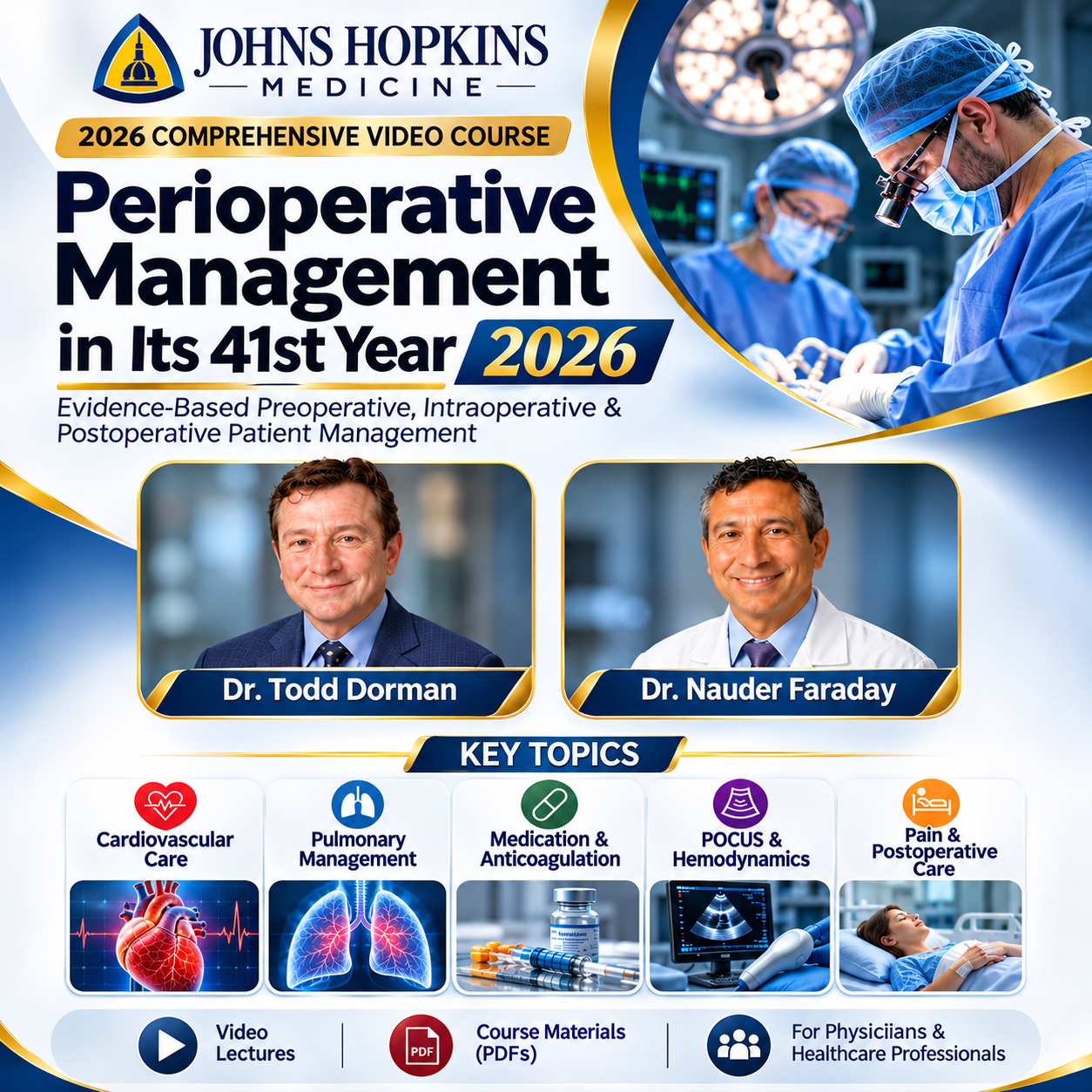




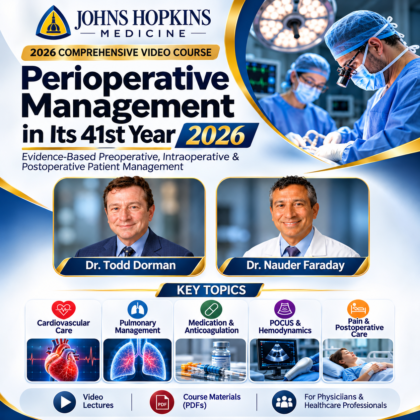
Perioperative Management
in Its 41st Year 2026
Evidence-Based Preoperative, Intraoperative & Postoperative Patient Management
Comprehensive Perioperative Medicine Education
Perioperative Management in Its 41st Year 2026 is a comprehensive educational program focused on the modern management of surgical patients before, during, and after surgery.
Designed for physicians and healthcare professionals involved in perioperative care, the program provides an evidence-based review of important clinical challenges including cardiac risk assessment, pulmonary optimization, anesthesia, pain management, anticoagulation, heart failure, diabetes, renal disease, infections, frailty, POCUS, ERAS, artificial intelligence, and postoperative complications.
Course Highlights
❤️ Cardiovascular Care
Cardiac risk assessment, heart failure, cardiomyopathy, ECG abnormalities and perioperative myocardial injury.
🫁 Pulmonary Management
Pulmonary risk assessment, respiratory failure, hypoxia, pulmonary hypertension and airway management.
💊 Medication & Anticoagulation
Antiplatelet therapy, Warfarin, DOACs and perioperative medication management.
🩺 POCUS & Hemodynamics
Point-of-Care Ultrasound and goal-directed hemodynamic approaches for perioperative decision-making.
🧠 Pain & Postoperative Care
Multimodal analgesia, delirium, respiratory complications and postoperative patient management.
🤖 Future of Perioperative Medicine
ERAS, continuous monitoring, quality improvement and emerging applications of artificial intelligence.
Who Should Attend?
This program is designed for healthcare professionals involved in the evaluation and management of surgical patients, including:
- Anesthesiologists
- Cardiologists
- Pulmonologists
- General Surgeons
- Hospitalists
- Intensivists
- Critical Care Physicians
- Nephrologists
- Endocrinologists
- Internal Medicine Physicians
- Nurse Practitioners
- Residents & Fellows
Learning Objectives
Participants will gain practical knowledge to:
- Perform evidence-based cardiac and pulmonary risk assessment.
- Optimize patients with heart failure, diabetes, renal disease, frailty and pulmonary hypertension.
- Apply current approaches to anticoagulation and antiplatelet management.
- Recognize and manage common postoperative complications.
- Use multimodal pain management strategies.
- Integrate POCUS into perioperative decision-making.
- Apply Enhanced Recovery After Surgery (ERAS) principles.
- Understand emerging applications of AI in perioperative medicine.
- Improve patient safety and perioperative quality of care.
Four-Day Educational Program
Cardiovascular Risk & Optimization
Cardiac assessment, heart failure, cardiomyopathy, anticoagulation, ECG interpretation, medications and POCUS.
Pulmonary Medicine & Airway
Pulmonary risk, respiratory failure, hemodynamics, airway management, sedation, hypoxia and postoperative cardiac issues.
Metabolic Medicine, Pain & Infection
Diabetes, renal dysfunction, pain management, infections, electrolytes, AKI, fluids and obstructive sleep apnea.
Frailty, Safety & Future Practice
DVT/PE, delirium, frailty, ERAS, sepsis, quality improvement, continuous monitoring and AI.
Why This Course?
Surgical patients are increasingly older and medically complex, making effective perioperative management more important than ever.
This program provides a broad clinical update covering cardiovascular optimization, anticoagulation, pulmonary care, pain management, POCUS, frailty, ERAS, postoperative complications, patient safety and emerging technologies. It is designed to provide practical knowledge that can support everyday perioperative decision-making.
Advance Your Perioperative Knowledge
Explore comprehensive, evidence-based education in modern perioperative medicine.

Reviews
There are no reviews yet.