
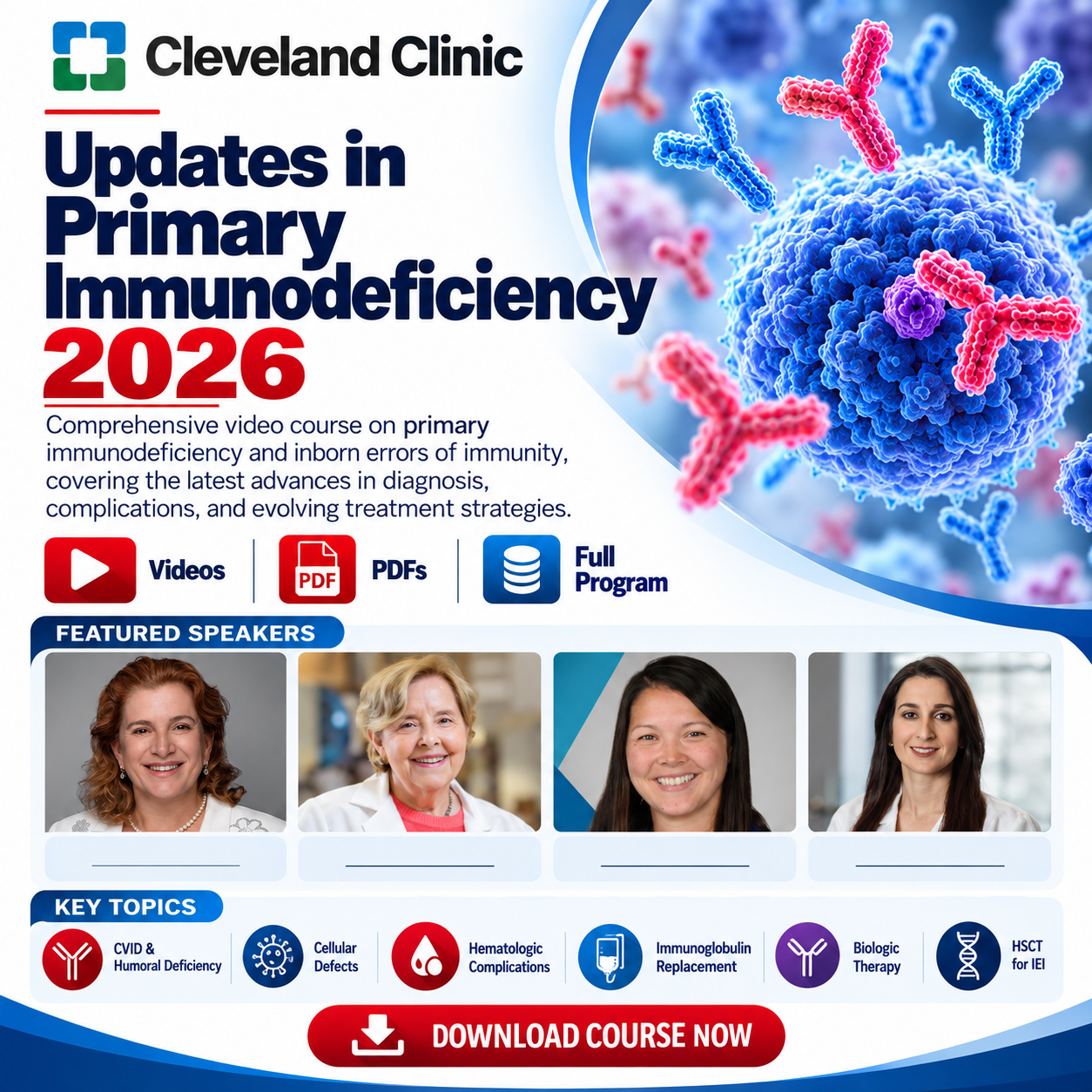





Cleveland Clinic Primary Immunodeficiency 2026
Comprehensive Primary Immunodeficiency & Inborn Errors of Immunity Video Course
🩺 Clinical Immunology
🔬 Inborn Errors of Immunity
💊 Emerging Therapies
Complex, Chronic Disorders
Major Educational Sections
Course Edition
Comprehensive Primary Immunodeficiency & Inborn Errors of Immunity Video Course
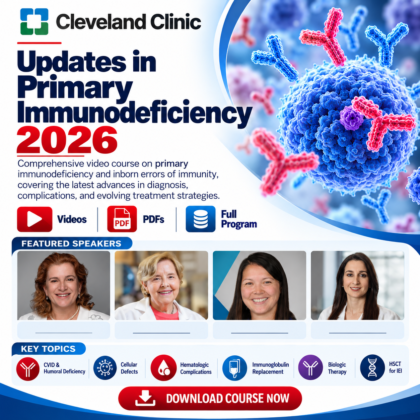
The Cleveland Clinic Updates in Primary Immunodeficiency 2026 is an advanced educational video course providing an in-depth review of primary immunodeficiency and inborn errors of immunity (IEI).
The program addresses both common and rare immune disorders and focuses on their diagnosis, clinical presentation, complications, and evolving treatment strategies. According to the course description, inborn errors of immunity comprise more than 600 complex, chronic disorders.
The 2026 program brings together specialists across immunology, allergy, hematology, rheumatology, infectious diseases, transplantation, and related fields to examine challenging immune disorders from a multidisciplinary perspective.
Cleveland Clinic Primary Immunodeficiency Course 2026
The course provides clinically focused updates on major areas of immunodeficiency, including common variable immunodeficiency (CVID), specific antibody deficiency, hematologic complications, cellular immune defects, recurrent infections, immunoglobulin replacement, biologic therapies, antibiotic resistance, and hematopoietic stem cell transplantation.
The program also explores emerging areas such as artificial intelligence in immunology and individualized approaches to patients with complex immune dysfunction.
Learning Objectives for Cleveland Clinic Primary Immunodeficiency 2026
The program is designed to help participants:
- Review current developments in common variable immunodeficiency syndrome
- Understand research involving IgE levels in immunodeficiency
- Review advances in specific antibody deficiency
- Apply updated diagnostic vaccination guidelines
- Recognize and manage hematologic complications of immune disease
- Review chronic neutropenia and immune thrombocytopenia
- Understand increased cancer risks in immunocompromised patients
- Review cancer-screening considerations in immunodeficiency
- Recognize immune disorders caused by cellular defects
- Improve evaluation of common symptoms in immunocompromised patients
- Explore applications of artificial intelligence in immune dysfunction
- Review innovations in immunoglobulin replacement therapy
- Understand the role of gene therapy and stem cell transplantation
- Evaluate therapeutic options for complex immunodeficiency diseases
Humoral Deficiency
The first major section concentrates on humoral immune deficiencies and their diagnosis.
CVID – The Latest
An updated review of Common Variable Immunodeficiency (CVID) and contemporary developments in the field.
CVID-Like Syndromes – APDS and Beyond
Discussion of disorders that can resemble CVID, including Activated PI3K Delta Syndrome (APDS) and related immune conditions.
Specific Antibody Deficiency
The course reviews:
- Specific antibody deficiency
- Diagnostic approaches
- Vaccine testing
- Updated diagnostic vaccination guidelines
IgE Levels – What Do They Tell Us?
A focused discussion of the clinical relevance and interpretation of IgE levels in patients with immunodeficiency.
Hematologic Complications
Immune disorders can be associated with important hematologic complications, and the program dedicates an entire section to these issues.
Topics include:
- Chronic Neutropenia – How to Handle
- Immune Thrombocytopenia (ITP) in Immune Disease
- Cancer in Immunodeficiency
- Cancer Screening Recommendations
Cellular Defects
The course provides focused education on disorders resulting from abnormalities in cellular immunity.
Idiopathic CD4 Lymphocytopenia
Review of an important disorder characterized by reduced CD4 T-cell levels.
Job’s Syndrome and CMCC
A dermatologic perspective on Job’s syndrome and chronic mucocutaneous candidiasis.
Mendelian Susceptibility to Mycobacterial Disease
Discussion of inherited immune defects associated with susceptibility to mycobacterial infections.
Chronic Granulomatous Disease in Adults
The course examines adult CGD, including X-linked disease and related clinical considerations.
Complex Immunodeficiency & Future Options
This section addresses some of the most challenging and rapidly evolving areas of clinical immunology.
Diagnostic Immunology Evaluation
Thinking Outside the Box: Diagnostic Immunology Evaluation of the Complex Immunology Patient
A focused approach to evaluating patients whose immune dysfunction does not fit straightforward diagnostic patterns.
Artificial Intelligence in Immunology
Using Artificial Intelligence to Your Advantage in Practice
The program explores how AI may be used to improve and individualize care for patients with immune dysfunction.
Biologics in Immunocompromised Patients
A dedicated session examines the use of biologic therapies in immunocompromised patients and the clinical considerations surrounding their use.
Therapies for Inborn Errors of Immunity
The second day turns toward therapeutic management and difficult clinical cases.
Immunoglobulin Replacement Therapy
The Headaches of Immunoglobulin Replacement – Literally and Figuratively
A practical discussion of challenges associated with immunoglobulin replacement therapy.
Antibiotic Resistance & Prophylaxis
The course examines:
- Antibiotic resistance
- Antimicrobial prophylaxis
- Challenges in patients with recurrent infections and immune dysfunction
HSCT for Adults with Immunodeficiencies
A dedicated session explores hematopoietic stem cell transplantation (HSCT) for adults with immunodeficiency disorders.
Difficult Cases with the Experts
A particularly practical component of the course is its series of challenging patient cases discussed by expert faculty.
Multiple “Difficult Cases with the Experts” sessions allow complex immunodeficiency presentations to be examined from a real-world clinical perspective.
The program includes three dedicated difficult-case discussions, involving expert faculty from different areas of immunology.
Common Symptoms in the Immunocompromised
The final section focuses on symptoms that clinicians frequently encounter in immunocompromised patients.
Musculoskeletal Pain
The course addresses musculoskeletal pain in antibody-deficient patients, including both diagnostic and therapeutic challenges.
Chronic Sinusitis
Chronic Sinusitis – When to Be Concerned
This session examines chronic sinusitis in the context of immune dysfunction and when persistent symptoms should prompt further investigation.
Major Topics Covered Cleveland Clinic Primary Immunodeficiency 2026
Target Audience
The Cleveland Clinic Updates in Primary Immunodeficiency 2026 is designed for healthcare professionals with an interest in immune disorders, particularly:
🧬 Immunologists
🌿 Allergists
🦠 Infectious Disease Specialists
🩺 Rheumatologists
🩸 Hematologists
👶 Pediatricians
🏥 Internal Medicine Physicians
🎓 Fellows and Residents
🩺 Physician Assistants
👩⚕️ Nurse Practitioners
🔬 Clinicians managing recurrent or complex infections
Cleveland Clinic Primary Immunodeficiency 2026 – Program Structure
The symposium takes place over September 18–19, 2026 and is organized into six major educational sessions:
- Session 1: Humoral Deficiency
- Session 2: Hematologic Complications
- Session 3: Cellular Defects
- Session 4: Complex Disease and Future Options
- Session 5: Therapies for IEI & Cases with the Experts
- Session 6: Common Symptoms in the Immunocompromised
Reviews
There are no reviews yet.