
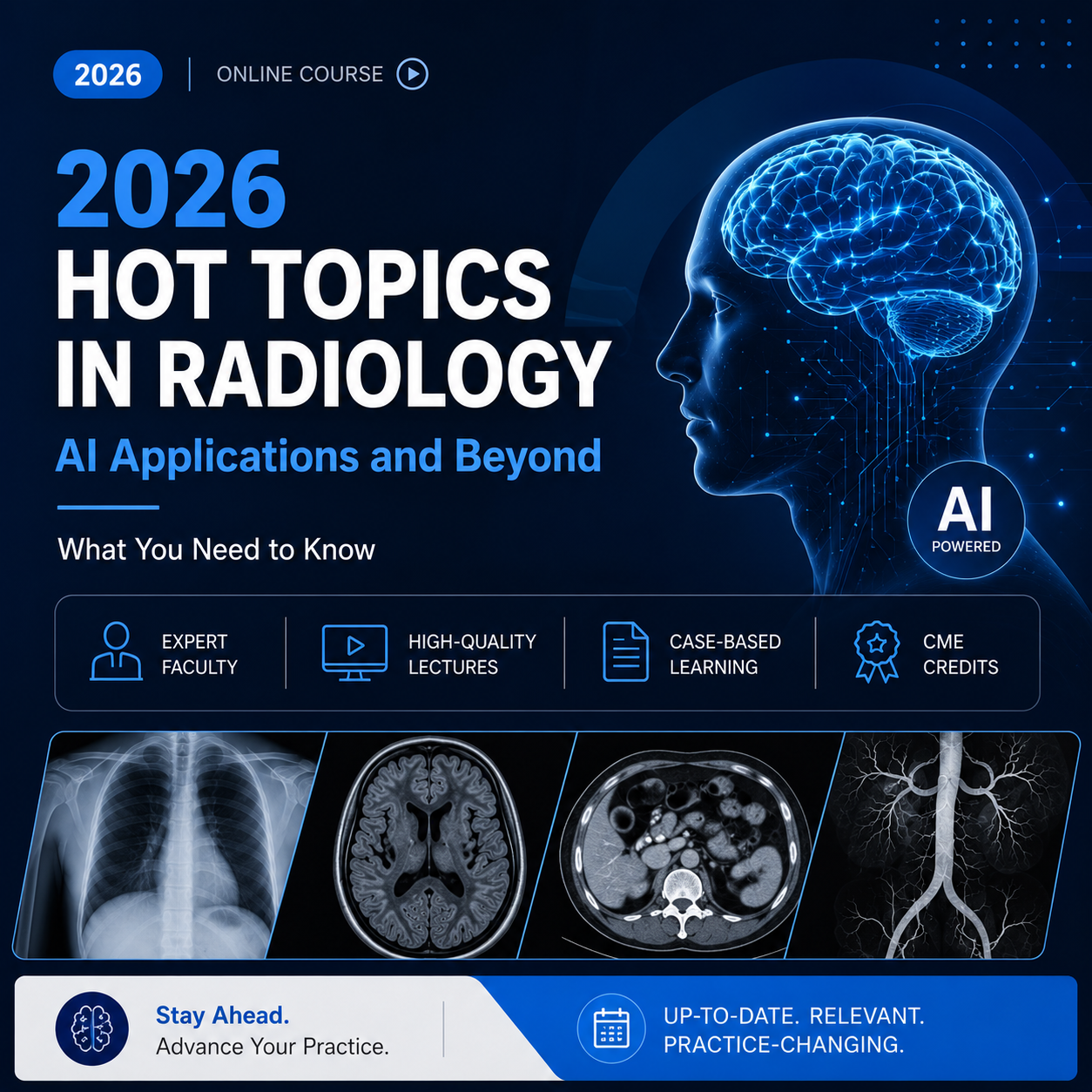



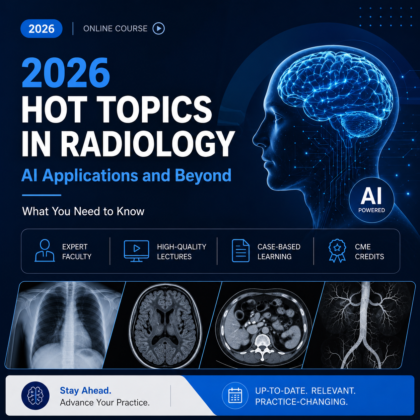
2026 Hot Topics in Radiology – AI Applications and Beyond: What You Need to Know
Comprehensive Updates in Diagnostic Radiology, Artificial Intelligence & Advanced Imaging
Target Audience
Target Audience: radiologists, neuroradiologists, musculoskeletal radiologists, breast imaging specialists, abdominal radiologists, neurologists, orthopedists, and urologists.
1. Overview
2026 Hot Topics in Radiology – AI Applications and Beyond: What You Need to Know is a comprehensive course designed to provide an in-depth update on the latest advancements in the field of diagnostic radiology. The program focuses heavily on the integration of Artificial Intelligence (AI) and deep learning into clinical practice, alongside crucial updates in MR contrast agents. Guided by expert faculty, the course explores state-of-the-art imaging techniques and multimodality case reviews across various subspecialties, including neuroimaging, musculoskeletal, hepatobiliary, breast, and prostate imaging, ensuring clinicians are equipped with the most current diagnostic strategies.
2. Learning Objectives
Upon completion of this course, participants will be able to:
- Evaluate the latest advancements and practical applications of deep learning image reconstruction and MR contrast agents.
- Apply updated imaging protocols and diagnostic criteria for neurodegenerative and demyelinating conditions, including Alzheimer’s disease and Multiple Sclerosis.
- Interpret complex musculoskeletal and body MRI cases, including shoulder instability, knee pathology, and multiparametric prostate MRI.
- Incorporate fundamental AI applications into breast imaging and recognize key imaging features of tumors, tumor mimics, and hepatobiliary diseases.
3. Target Audience
Who Should Participate: Practicing radiologists, radiology residents, and fellows seeking a comprehensive review of current imaging practices and emerging AI technologies. Radiologic technologists, advanced practice nurses, and physician assistants who work in imaging environments will also find this program highly beneficial for improving patient care.
Best for radiologists, neuroradiologists, musculoskeletal radiologists, breast imaging specialists, abdominal radiologists, neurologists, orthopedists, and urologists.
4. Topics
Note: The following represents the accessible lectures from the course program
(NOT RELEASE)
Reviews
There are no reviews yet.